The Question That Separates Good Hospitality Leaders from Great Ones
CultureHiringLeadershipLearning & Development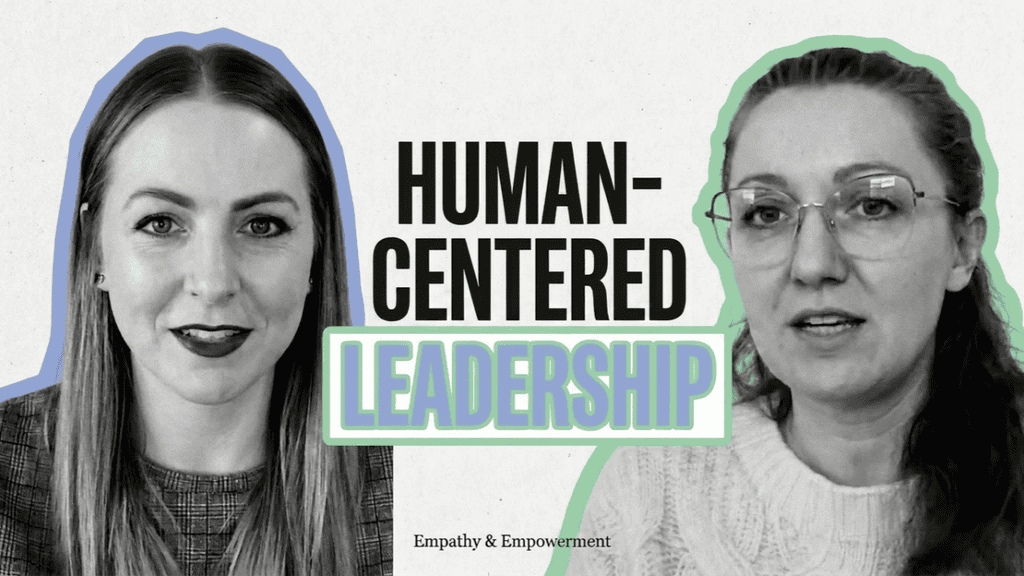
By: Alicia
The Question That Separates Good Hospitality Leaders from Great Ones
Most managers ask why.
Why did this not get done. Why did that go wrong. Why was the standard not met.
One question. Completely different outcome.
Julia Brost asked me to think about the difference between “why didn’t you do this” and “what is getting in your way.” It sounds small. It is not small. One is an accusation dressed as a question. The other is a door.
I had Julia on the very first episode of Hospitality Folks. She started on the front lines of a bed and breakfast in Oxford, fell in love with the industry, then went deep at the Hyatt Regency in Cologne where she completed a full apprenticeship across eight departments. Housekeeping, front desk, F&B, VIP floor, concierge. She did not learn hospitality from a desk. She learned it from every corner of the operation. That foundation led her into quality assurance and training, where she has spent her career doing one thing: bridging the gap between what leadership expects and what frontline teams actually experience.
She is one of the clearest thinkers I have spoken to about what human-centered leadership looks like in practice. Not in theory. In practice, on a shift, during an audit, when everything is moving at once.
What high pressure actually looks like behind the scenes
Guests see the calm smile. They do not see what is behind it.
Julia described it as invisible multitasking in an interrupt-driven environment. A check-in queue. A last-minute room change. The phone ringing. A VIP request coming through simultaneously. A key system failing. A supplier dropping out minutes before a banquet. An audit happening while the team is already stretched.
The pressure, she said, is not just the volume of tasks. It is the emotional labor of managing your own stress internally while delivering seamless grace externally. Solving five problems before the guest even knows one exists.
In those moments, what does a team actually need from their leader?
Clarity. Calm. Trust.
Not answers. Not performance. The knowledge that their leader has their back if something goes wrong. She put it simply: panic is contagious, but so is composure. When a leader stays grounded, it gives everyone permission to breathe.
The audit question that changes everything
Julia runs audits differently than most.
She does not frame them as fault-finding missions. She frames them as collaborative tools. She listens for intent, not just answers. If a team member starts answering in a direction that shows they misunderstood the question, whether from language, nerves, or different framing, she does not hold them to the script. She rephrases. She guides. She creates space for honest dialogue instead of interrogation.
That is empathy in practice. Not a concept. An actual behavior on an actual day.
The question she keeps coming back to: what is getting in your way. Not why did you fail. What is in between you and the outcome we both want. That question assumes capability. It looks for barriers. It treats the person in front of you as someone worth understanding.
Her results speak for themselves. She drove group-wide audit scores from 77% to 84% in a single year at The Social Hub. Not by enforcing harder. By building differently.
Her own biggest mistake
Julia takes pride in her work. Real pride. The kind that makes you want to handle things yourself, deliver strong outcomes, own every result.
It is also the thing that almost broke her.
She told me the biggest mistake she made early in her career was not asking for help. That pride, unchecked, leads to overwork. Overwork leads to burnout. Burnout is one of the biggest drivers of hospitality’s notoriously high turnover rate. She knows this because she lived it.
What she teaches her teams now: asking for help is not a sign of failure. It is the opposite. It is knowing you are not in this alone. It is building something together instead of collapsing alone.
How she thinks about hiring
I gave her a magic wand question at the end of our conversation. If she could change one thing about hospitality hiring tomorrow, what would it be.
She did not hesitate. We hire for the job today and overlook the leader tomorrow. We filter for who can handle the pressure right now and miss the person who has the capacity to grow, adapt, and inspire others over time.
Her answer: shift the focus toward potential, empathy, and learnability. Technical skills can be taught. The heart to serve and the mind to lead cannot.
I have felt this for years. When I was an operations manager in the US, I used to walk into Tim Hortons locations specifically to watch how the team treated customers. Then I would try to poach them. Not because they knew hospitality. Because they had the thing you cannot train into someone.
Julia has a name for it. Lead with your ears first. Your team already knows the problems. Your job is to listen and empower them to solve it.
Where Julia is headed next
Julia is actively looking for her next team. She is based in the Netherlands, open to relocating across Europe, and native speaker of German, fluent in English, working on her Spanish.
She is looking for a role in Learning and Development within hospitality. Not someone who parachutes in with a clipboard. Someone who rolls up her sleeves, builds from the floor up, and leaves teams more capable than she found them.
Her track record is specific. She drove group-wide audit scores from 77% to 84% in a single year at The Social Hub. She led SOP modernization across 21 hotel properties, turning static PDFs into interactive learning tools. She cut support requests by 40% through structured team enablement. She holds a Master’s in Information Management, Cum Laude, and a PRINCE2 project management certification. She can manage the implementation side just as well as the people side.
She is the rare person who understands both the strategic framework and what it actually feels like to be the one on shift when everything is moving at once.
If you are building or rebuilding an L&D function in hospitality and want someone who has lived the frontline and can translate that into systems that actually stick, Julia is the conversation worth having.
Find her on LinkedIn at Julia Silvia Brost.
Watch the full episode is on Hospitality Folks, available on Spotify, YouTube, and Apple Podcasts.
If you lead a hospitality team: are you asking why, or are you asking what is in the way?
Follow me, Alicia Dick Wahlberg Alicia Dick Wahlberg, for hospitality and workforce conversations that hotel operators and founders are actually having behind closed doors.
Julia Silvia Brost | Quality & L&D Specialist | Europe, Open to Relocation